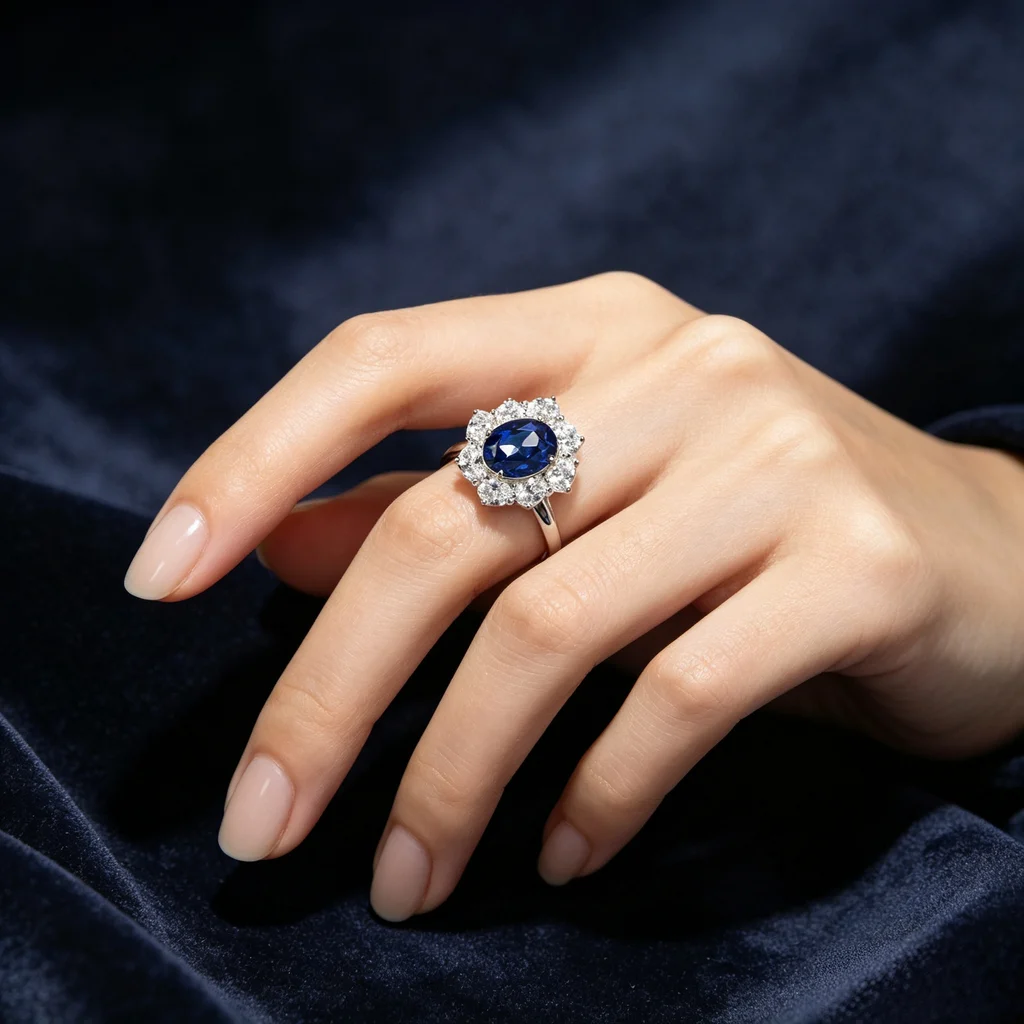
If you’ve ever fallen in love with the sapphire engagement ring that once belonged to Princess Diana — and now shines on the finger of Kate Middleton — you are not alone. For decades, that iconic 12-carat oval Ceylon sapphire, surrounded by 14 solitaire diamonds, has been the most copied engagement ring design in the world. In short, Royal Love Story Lab-Grown is the deciding factor for most buyers.
Therefore, But here’s what most people don’t know: you don’t have to spend tens of thousands of dollars to wear that exact look. Today, modern jewelry craftsmanship and ethically lab-grown gemstones have made it possible to own a ring inspired by that legendary design — with the same breathtaking beauty, at a fraction of the price, and without any of the environmental or ethical concerns of mining.
Moreover, This is the story of the Lab-Grown Sapphire Sunflower Halo Ring — and why it might be the smartest, most meaningful engagement ring you will ever buy.
A Royal Love Story: Why the Sapphire Halo Ring Endures
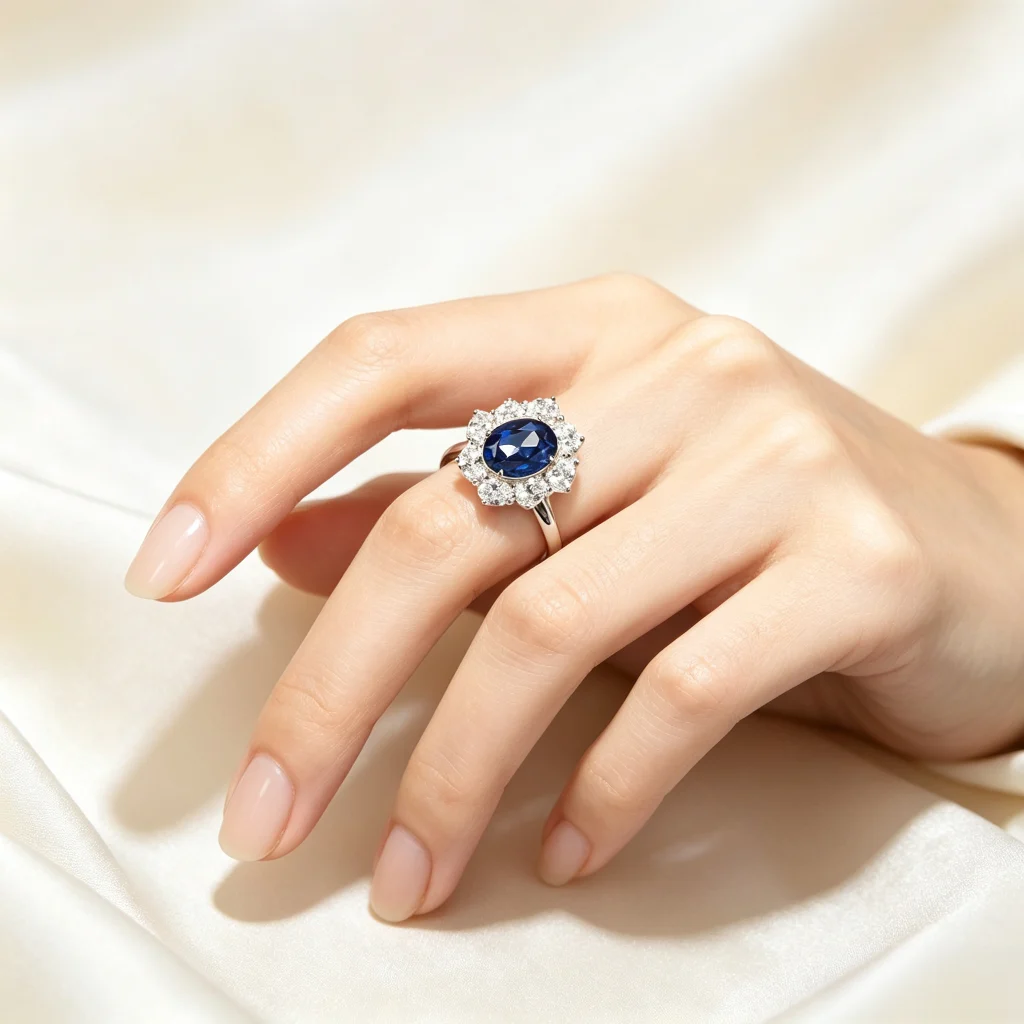
In addition, When Prince Charles slipped a 12-carat blue sapphire ring onto Princess Diana’s finger in 1981, he unknowingly launched a global jewelry trend that has never faded. The design itself was radical: a deep, vivid blue oval sapphire, framed not by a single halo of pavé diamonds, but by 14 solitaire diamonds arranged like petals around the center stone — a design that would later be nicknamed the “sunflower halo.”
For example, When Prince William proposed to Kate Middleton with the very same ring in 2010, demand for sapphire halo rings exploded all over again. Today, the design remains one of the most searched-for engagement ring styles worldwide — a true testament to the fact that some things are genuinely timeless.
The Lab-Grown Sapphire: Identical Beauty, Smarter Origin
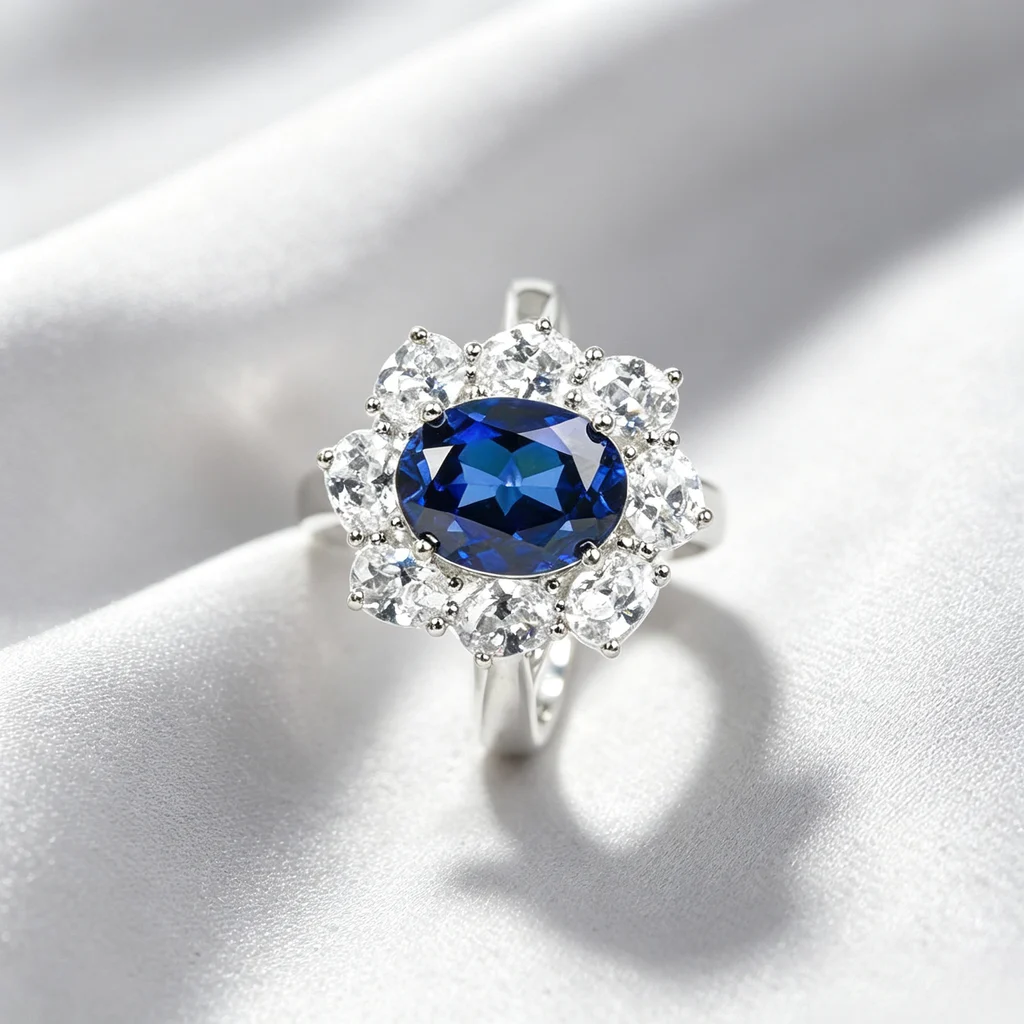
Consequently, The centerpiece of this ring is a lab-grown blue sapphire, cut in the same elegant oval shape that defines Diana’s original. To the naked eye — and even to most jewelers — a lab-grown sapphire is chemically, physically, and optically identical to a mined one. The same aluminum oxide crystal. The same deep, velvety blue. The same hardness (9 on the Mohs scale, second only to diamond).
So what is actually different? Three things:
- Origin: Lab-grown sapphires are created in controlled laboratory environments that replicate the natural conditions under which sapphires form deep within the earth — but in a matter of weeks, not millions of years.
- Ethics: No mining. No conflict zones. No environmental destruction. No human-rights concerns.
- Price: Lab-grown sapphires typically cost 60–80% less than their mined counterparts, without any compromise in beauty or durability.
The result? A stone of equal brilliance and meaning, made accessible — and made responsibly.
The Diamond Halo: 14 Solitaires, One Perfect Frame
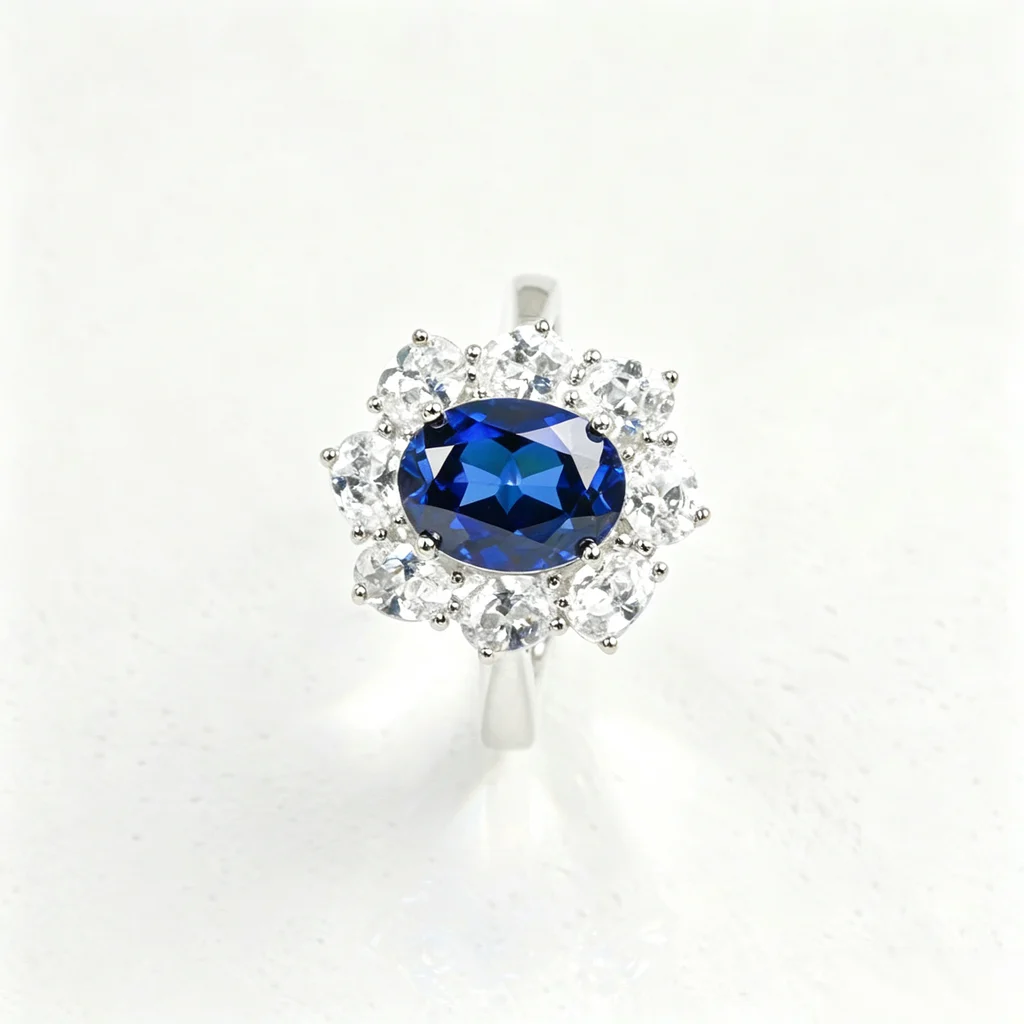
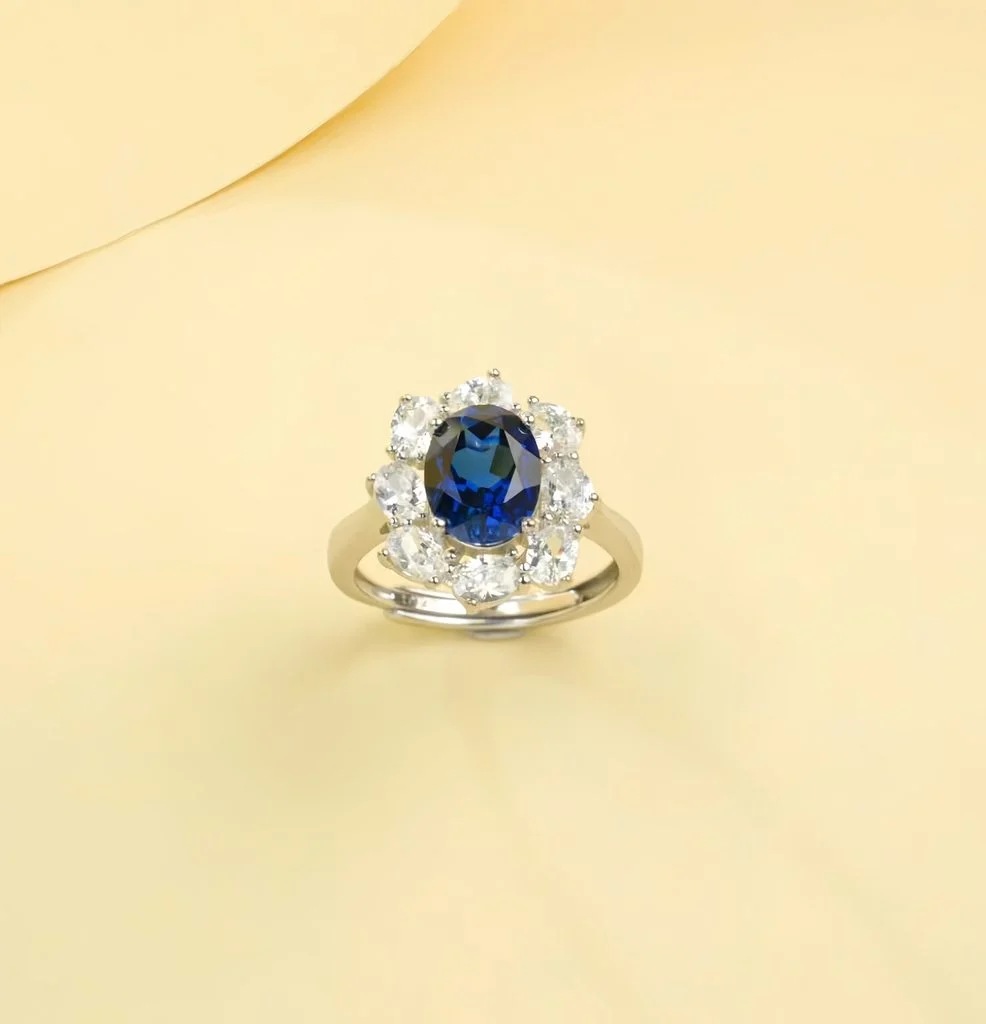
Surrounding the center sapphire are 14 lab-created diamonds, each held in its own prong setting, arranged like petals radiating outward from the center stone. This is the detail that gives the ring its famous “sunflower” silhouette — and it is the detail that elevates the entire design.
The diamonds are round brilliant cut, chosen specifically for their fire and sparkle. Each one is set on a small individual prong, which means light enters from every angle, maximizing brilliance. Together, they form a luminous white frame that makes the blue sapphire appear even deeper, even more vivid, even more alive.
S925 Sterling Silver: Strong, Pure, and Built to Last
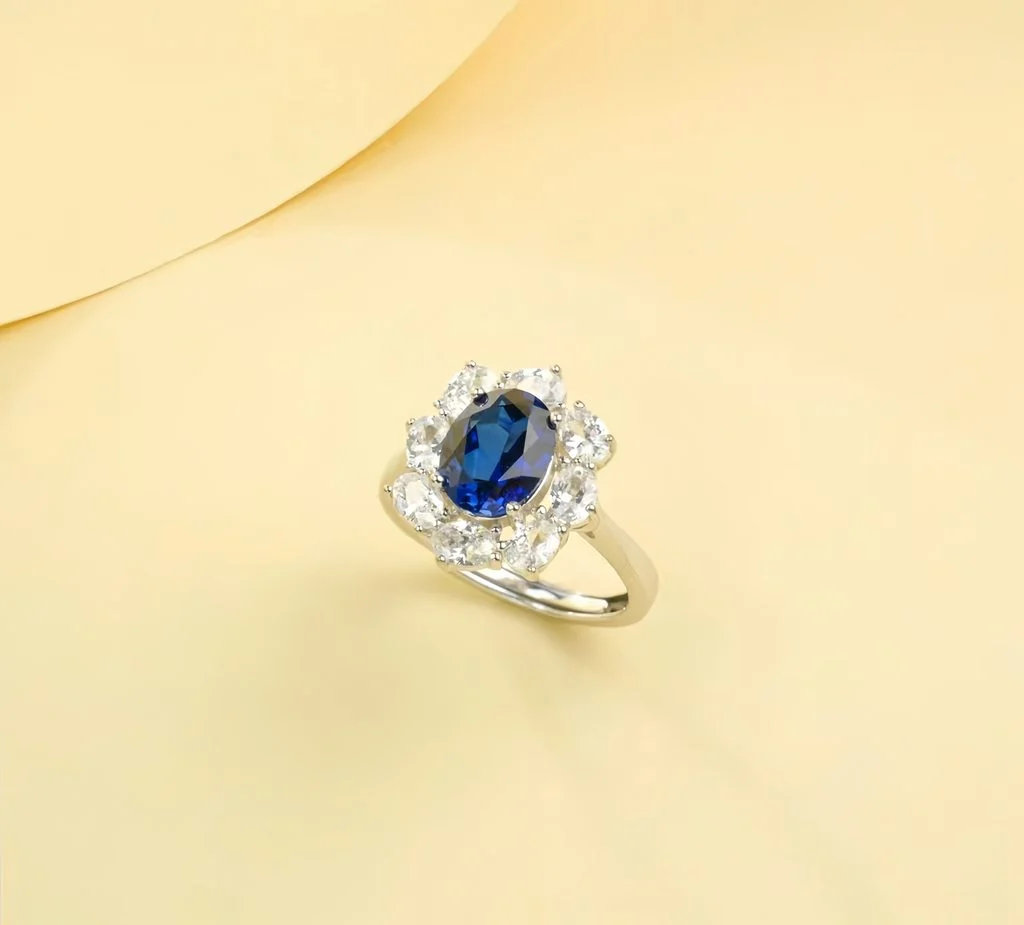
The band and setting are crafted from S925 sterling silver — 92.5% pure silver, alloyed with 7.5% other metals (typically copper) for strength and durability. Sterling silver has been the standard in fine jewelry for centuries, prized for its bright white finish, its resistance to tarnish, and its ability to hold intricate details like the 14-prong halo of this ring.
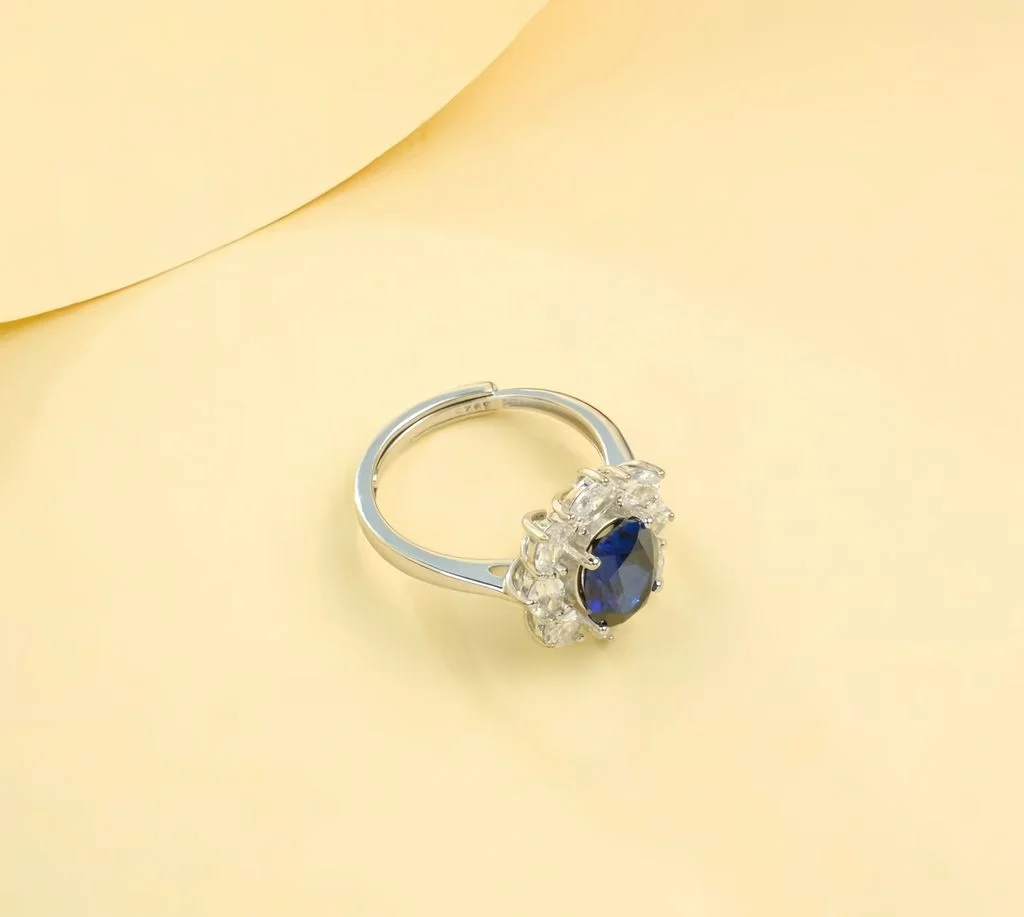
Each ring is stamped with the “S925” hallmark on the inside of the band, a guarantee of authenticity and quality that has been used by jewelers worldwide for over a century.
To preserve the brilliant white finish, the silver is finished with a protective rhodium plating, which adds a layer of scratch resistance and helps the metal resist daily wear. With basic care, an S925 sterling silver ring can last a lifetime — and become a family heirloom.
Adjustable, Comfortable, and Made for Real Life
This ring is designed to be slightly adjustable, so you don’t need to know your exact ring size to give (or wear) it. The band can be gently resized to fit a range of finger sizes, making it a stress-free gift for proposals, anniversaries, or “just because” moments. The band itself is smooth, polished, and comfortable for daily wear.
Why This Ring Is the Perfect Modern Choice
If you have been searching for an engagement ring (or a meaningful gift) that combines timeless design, ethical sourcing, and accessible luxury, this lab-grown sapphire sunflower halo ring checks every box:
- Iconic Design: Inspired by the most famous engagement ring of the 20th century
- Ethical & Sustainable: Lab-grown gemstones and recycled-friendly sterling silver
- Affordable Luxury: All the brilliance, a fraction of the price of a mined sapphire
- September Birthstone: Sapphire is the traditional birthstone for September
- Anniversary Gemstone: Sapphire is also the traditional gift for the 5th and 45th wedding anniversaries
- Daily Wear: Hard, durable, and built to last a lifetime
- Adjustable Fit: Stress-free gifting, no precise sizing required
- Heirloom Quality: S925 sterling silver, rhodium plated, with a timeless design that never goes out of style
Final Thoughts: A Ring That Tells a Story
The most beautiful jewelry is not the most expensive — it is the piece that carries meaning. A sapphire halo ring tells a story of royal romance, of timeless elegance, of love that endures across generations. Choosing a lab-grown sapphire version of this iconic design means you carry that story forward, but on your own terms: ethically sourced, beautifully made, and thoughtfully priced.
It is not just an engagement ring. It is a love letter — written in blue sapphire and white diamond, and signed by a century of romantics who believed some things are worth keeping.
Discover the Lab-Grown Sapphire Sunflower Halo Ring today — and start your own chapter of a story that never goes out of style.
Categories: Jewelry, Engagement Rings, Ethical Jewelry
Tags: lab grown sapphire ring, sunflower halo ring, blue sapphire engagement ring, princess diana ring, lab created diamond ring, S925 silver ring, adjustable ring, ethical jewelry, halo engagement ring, oval sapphire ring, open band ring, affordable luxury ring, september birthstone, 5th anniversary gift That is why Royal Love Story Lab-Grown keeps gaining attention in this category.
Related Articles
- 10 Things to Know Before Buying a Lab-Grown Blue Sapphire Ring
- Lab-Grown Emerald Crown Ring: Where Royalty Meets Modern Ethics
You Might Also Like
Frequently Asked Questions
Is Royal Love Story Lab-grown worth buying?
Based on the breakdown in this article, Royal Love Story Lab-grown offers a strong mix of craftsmanship, stone quality and price. If the style matches what you actually wear, it is a practical choice for everyday elegance or gifting.
How do I choose the right royal love story lab-grown for my needs?
Start with the style you will really wear, then compare the stones (color, clarity, cut and carat), the metal type and the sizing options covered above. The right royal love story lab-grown balances quality with your everyday look.
Are the stones in royal love story lab-grown real?
Yes. Lab-grown stones are genuine gemstones created above ground with the same chemical, optical and physical properties as mined ones — usually at a lower price and with a smaller environmental footprint.
What if my royal love story lab-grown does not fit?
Measure your finger at the end of the day when it is warmest, or check the size guide on the product page. Most rings can be resized by a local jeweler within a size or two.
