You buy a baroque pearl necklace, take it out of the box, and the first thing you notice is that no two pearls are the same shape. One is a flattened oval, one looks like a comma, one is almost a cube. If you were expecting a string of identical spheres, it reads as a mistake.
It isn’t. It’s the whole point — and it also explains why baroque pearls cost what they do.
What “baroque” actually means
Baroque is simply the trade term for a pearl that isn’t round. The word comes from the Portuguese barroco, which originally described an irregular pearl; the art and architecture meaning came later.
A pearl forms when something irritates the mollusc and the animal coats it in layer after layer of aragonite platelets held together by a protein called conchiolin. If those layers go down evenly over a perfectly round bead nucleus, you get a round pearl. If the nucleus shifts, or the pearl sac changes shape, or the deposit rate varies from week to week, you get a lump. Freshwater pearls are usually tissue-nucleated — no bead at all — which is exactly why they throw off so many off-round shapes.
Shape is the least important of the four
Pearl value runs on lustre, surface, shape and size, roughly in that order of weight. Most people shop the other way round, because shape is the only one of the four you can judge from a photo.
Lustre is what decides whether a pearl looks alive or looks like a painted bead. It comes from how thin and how evenly stacked those aragonite platelets are. You don’t need a loupe to test it: hold the pearl up and look for a reflection. If it’s sharp enough that you can make out the edge of a window frame or the line of a lamp, that’s good lustre. If the reflection is soft and blurry, or the pearl only glows without reflecting anything at all, that’s chalky — and no amount of interesting shape rescues a chalky pearl.
Surface is a separate thing from shape. A baroque pearl can have a beautiful surface. What you’re looking for are pits, cracks and dull patches, usually on the side that sat against the shell. Run a fingernail across it. A pit you can feel is a pit you’ll keep seeing.
The matching problem cuts both ways
A strand of round pearls has to be matched: same size, same lustre, same surface, same overtone. Matching is expensive, because a grader is sorting through thousands of pearls to fill one string. Baroque strands skip most of that. Two pearls that look nothing alike can sit next to each other happily, because the eye reads the strand as a set of variations rather than a row that’s supposed to repeat.
That’s the honest reason baroque is cheaper per pearl. It isn’t worse. It’s unsorted.
There’s an exception worth knowing, though. Large baroques with strong lustre, a clean surface and a genuinely interesting shape get pulled out and sold individually — often for more than a mediocre round pearl. Those are the ones set as a single drop on a pendant, or as earrings where the two halves deliberately don’t quite mirror each other. So “baroque is the cheap one” is a rule with a real exception, and if you’re looking at a single large drop rather than a strand, assume you’re in the exception.
Where the shape helps and where it doesn’t
Baroque is easiest to wear as a pendant or as earrings, because an asymmetrical object is supposed to look asymmetrical there. Nothing nearby is setting up an expectation of symmetry, so the shape just reads as character. Our baroque pearl pieces are mostly built around exactly that — one stone, left to be itself.
Necklaces are harder. A baroque strand works when the sizes graduate, smallest at the clasp and largest at the front, because that gives the eye one rule to follow instead of none. A strand of same-sized baroque pearls with no gradation tends to look accidental rather than chosen. If you want the longer length, look at how the sizes run before you look at the colour — gradation is doing more work than tone is.
Chokers are the hardest of all, simply because everything sits close together and every surface flaw ends up at reading distance. It’s the one place where a slightly boring, very clean pearl beats a dramatic one. Worth checking against a choker-length piece before you commit to the idea.
How not to ruin them
Pearl is an organic gem, mostly calcium carbonate, sitting somewhere around 2.5 to 4.5 on the Mohs scale. Household dust is largely quartz, which is 7. That means wiping a pearl with a dry cloth that has grit in it will scratch it. Rinse the cloth first, or use a clean one — this is the single most common way people damage pearls in the first month.
Last on, first off. Perfume, hairspray and deodorant go on before the pearls come out of the pouch, and the pearls come off before any of that gets removed. Acid is the enemy: vinegar, lemon juice and most bathroom cleaners will dull the surface in seconds and leave a white mark that cannot be polished out.
Never ultrasonic, never steam, never a commercial jewellery dip. And never leave them soaking. The string stretches, and water gets into the drill hole, where it can lift the nacre away from the nucleus from the inside — damage you won’t see until months later.
Wear them, wipe them with a soft damp cloth, let them dry flat, then back into the pouch. Store flat and separate. A pearl sharing a drawer with a chain or a clasp will get scratched by it.
One myth worth killing: pearls do not get brighter the more you wear them, and body oils do not feed them. What builds up is a film of cosmetics and skin oil, and it makes them duller. Gentle regular wiping is what keeps them looking like the day you bought them — not wearing them more.
If you’re stuck between two pieces, put both against your jaw in daylight and take the one that throws back a clear line. That single test beats anything written on a product page.
Related Articles
- Handmade Gemstone and Baroque Pearl Statement Necklace: Unique Wearable Art for Bold Style
- Hand Wire Wrapped Baroque Pearl Necklace: Quiet Luxury Jewelry That Goes With Everything
- Baroque Pearl vs Round Pearl: Which Style Suits You
- Baroque Freshwater Pearl Long Layered Necklace – Timeless Quiet Luxury Jewelry for All Outfits
- Baroque Pearl Jewelry: How to Style an Irregular Freshwater Pearl Choker
You Might Also Like
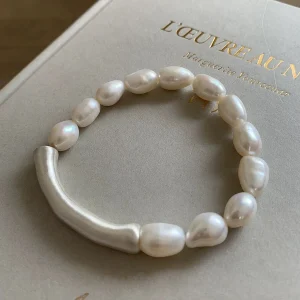 Baroque Pearl Bracelet – 999 Fine Silver Tube Original price was: $45.96.$33.96Current price is: $33.96.
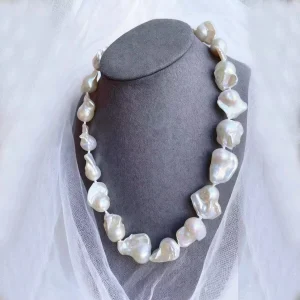 Large Baroque Pearl Necklace – Irregular Freshwater Price range: $107.98 through $130.99
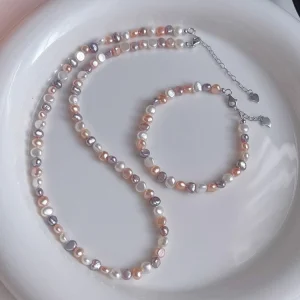 Dopamine Natural Freshwater Baroque Pearl Necklace Price range: $15.96 through $25.96
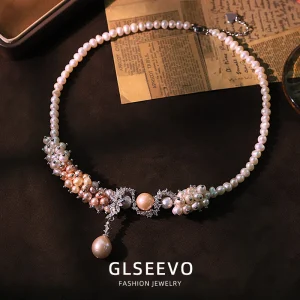 Vintage Natural Pink White Pearl Flower Vine S-Shape Zirc Original price was: $69.96.$59.99Current price is: $59.99.
Frequently Asked Questions
Is Baroque Pearls Why No worth buying?
Based on the breakdown in this article, Baroque Pearls Why No offers a strong mix of craftsmanship, stone quality and price. If the style matches what you actually wear, it is a practical choice for everyday elegance or gifting.
How do I choose the right baroque pearls why no for my needs?
Start with the style you will really wear, then compare the stones (color, clarity, cut and carat), the metal type and the sizing options covered above. The right baroque pearls why no balances quality with your everyday look.
What if my baroque pearls why no does not fit?
Measure your finger at the end of the day when it is warmest, or check the size guide on the product page. Most rings can be resized by a local jeweler within a size or two.
Will baroque pearls why no tarnish or irritate sensitive skin?
Solid gold, platinum and rhodium-plated sterling silver are the most skin-friendly options. Keep the piece dry, store it in a closed pouch, and wipe it with a soft cloth after wear to keep its shine for years.
📌 This article is part of our Complete Pearl Hub — more guides and buying tips inside.
Related Articles
- Baroque Pearl Bracelets: How to Choose an Adjustable Fit
- Baroque Pearl vs Round Pearl: Which Style Suits You
- Baroque Pearl Jewelry: How to Style an Irregular Freshwater Pearl Choker
- Vintage Chinese Earrings Explained: Blue Enamel, Pearls, and How to Wear Them
- Why a Brushed Sterling Silver Bracelet Belongs in Every Jewelry Box
