Freshwater pearls come in two broad styles: the perfectly round classic and the irregular baroque. Same material, grown the same way — but they read completely differently on the body. Round carries tradition; baroque carries personality. This guide compares the two honestly so you can pick for the person and the outfit, not by default. In short, Baroque Pearl vs Round is the deciding factor for most buyers.
Quick Answer
For a wedding, an office wardrobe, or a gift for someone with classic taste, go round. For a statement piece worn to be noticed, go baroque — you also get more pearl per dollar, since perfect roundness is the premium you would otherwise pay for. Neither is better; they solve different styling problems, and most wardrobes have room for both.
What “Baroque” Actually Means
Baroque is the trade word for any pearl that is not round, and the category is wider than most people expect:
- Potato and off-round — nearly round, gently asymmetric; the budget middle ground.
- Coin and button — flattened discs that lie flat against the skin; popular on layered chains.
- Drop and teardrop — elongated shapes that flatter on earrings and pendants.
- Stick and cross — long irregular spikes used in modern designer strands.
- Keshi — all-nacre accidents of the culturing process, usually high-luster and freeform.
What baroque is not: fake, damaged, or a failed pearl. It is simply the shape the mollusk produced — see why organic pearls are fashion’s new luxury for how stylists treat it.
How Freshwater Pearls Are Formed
A pearl is the mollusk’s response to an irritant: nacre — the same material as mother-of-pearl — wrapped layer over layer for one to three years. Saltwater pearls are usually grown around a round bead nucleus, so roundness is inherited from the bead. Most freshwater pearls grow from mantle tissue alone, so the pearl is solid nacre all the way through.
Two consequences: the mollusk decides the shape, which is why freshwater production skews baroque; and solid nacre means no bead to wear through, so a good freshwater pearl lasts decades of normal wear.
Side-by-Side Comparison
| Factor | Round Pearl | Baroque Pearl |
|---|---|---|
| Shape | Symmetrical sphere, uniform in a strand | Every pearl unique |
| Price for size | Premium — perfect roundness is rarest | Less per millimeter |
| Reads as | Classic, bridal, formal | Modern, artistic, individual |
| Symmetry in pairs | Easy to match earrings | Near-matches are part of the charm |
| Statement per dollar | Moderate | High — irregular shapes look bigger |
| Best for | Weddings, gifts, office wear | Everyday statement, layered looks |
When Round Is the Right Pick
Round wins wherever the setting is symmetrical and the occasion is formal. A pair of matched round studs, a single-strand round choker, a solitaire pearl ring — these read instantly as “proper” jewelry and photograph cleanly with evening wear. Round is also the safer gift when you are unsure of the recipient’s taste: nobody has ever been disappointed by round pearls. If you are shopping a wedding or a milestone birthday, start with freshwater pearl necklaces and pearl chokers.
When Baroque Wins
Baroque wins on originality and on size-per-dollar. Because no two pearls match, a baroque piece is one of a kind by construction — the exact appeal behind the irregular pearl choker trend. Irregular shapes also catch light at more angles, so a baroque strand often looks more alive than a round one at the same price. For everyday styling ideas, see the French-girl guide to baroque pearls and the multicolor dopamine strand guide; for the maximalist case, why baroque is the only statement necklace you need.
How to Judge Quality Either Way
Shape choice is style; quality is separate. Judge both styles on:
- Luster — the priority. A sharp, mirror-like reflection with distinct edges beats every other attribute. Dull skin cannot be styled away.
- Surface — small pits and wrinkles are normal on baroque; deep cracks and peeling nacre are not.
- Nacre thickness — solid-nacre freshwater pearls rarely fail here, but chalky, thin-looking skin on cheap strands is a warning.
- Shape consistency — for round: match within the strand; for baroque: a deliberate family of shapes, not random noise.
Styling Notes
Round pearls sit closest to the skin and suit high necklines, blazers, and bridal white. Baroque pearls do better with breathing room — open collars, knitwear, a bare collarbone — because their shapes need space to be read. A practical rule from our styling guides: wear round for the photograph, baroque for the dinner after. A daily double-layer option is covered in how to style a double-layer pearl choker.
Frequently Asked Questions
Are baroque pearls real pearls?
Yes. Baroque only describes shape, not authenticity. A baroque freshwater pearl is grown in a mollusk exactly like a round one — the mollusk simply produced an irregular form. Faux pearls are glass, shell, or plastic imitations with no nacre, and look uniformly perfect.
Why are baroque pearls cheaper than round?
Because perfectly round is the rarest outcome and sorting for it discards most of a harvest. Baroque shapes are abundant, so the same farming cost is spread over more sellable pearls. You are not buying lower quality — you are skipping the roundness premium.
Do baroque pearls hold their value?
As fashion jewelry, both round and baroque freshwater pearls are affordable rather than investment items. High-luster strands from known farms hold value best, but the honest reason to buy either is to wear it, not to resell it.
How can I tell a freshwater pearl from a saltwater one?
Practical clues: freshwater pearls rarely come in large perfectly round sizes, they show a warm to white body color rather than the silver-pink of akoya, and most are solid nacre so they feel heavier for their size. A certain answer needs X-raying or lamping at a lab, which retailers do not do at the counter.
Which is better as a gift?
Round for classic recipients and formal occasions; baroque for anyone with a defined personal style. When unsure, round is the safe pick — when you know the person wears jewelry to be seen, baroque is the more thoughtful one.
How do I care for pearls?
Last thing on, first thing off. Pearls are organic nacre, so perfume, hairspray, and sweat dull them. Wipe with a soft dry cloth after wear, store flat and separate from metal jewelry, and restring a frequently-worn strand every couple of years. Never ultrasonic-clean them.
Next Reading
- Shop baroque pearl jewelry
- Baroque pearl jewelry trends for 2026
- Lab-grown vs natural gemstones: how to choose for your budget
📌 This article is part of our Complete Freshwater Pearl Necklace Hub — more guides and buying tips inside. That is why Baroque Pearl vs Round keeps gaining attention in this category.
Related Articles
- Lab-Grown vs Natural Gemstones: How to Choose for Your Budget
- Baroque Pearl Bracelets: How to Wear Irregular Pearls Every Day
- Why Baroque Pearls Are the Only Statement Necklace You Need This Season
- The Tiny Accessory That Elevates Every Outfit: Swarovski Pearl Choker with Wine-Red Zirconia
- Colorful Crystal Pearl Necklace: How to Style Multicolour Beads
You Might Also Like
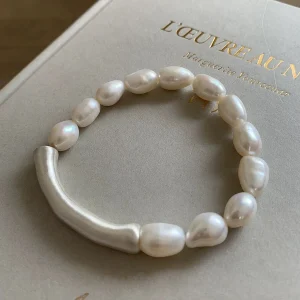 Baroque Pearl Bracelet – 999 Fine Silver Tube Original price was: $45.96.$33.96Current price is: $33.96.
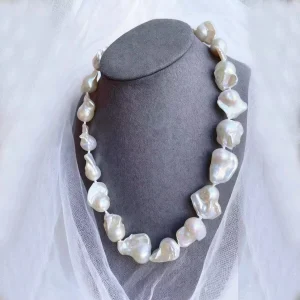 Large Baroque Pearl Necklace – Irregular Freshwater Price range: $107.98 through $130.99
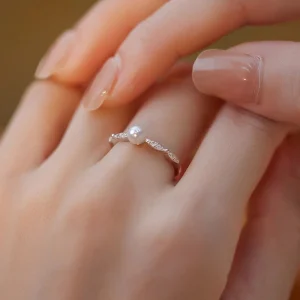 Freshwater Pearl Ring – S925 Silver Adjustable Original price was: $29.96.$19.96Current price is: $19.96.
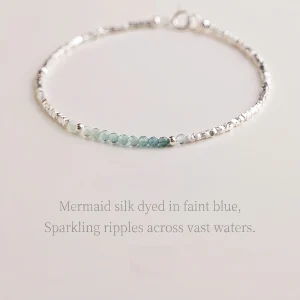 925 Silver Tiny Chip Beads Bracelet Original price was: $39.96.$29.96Current price is: $29.96.
